
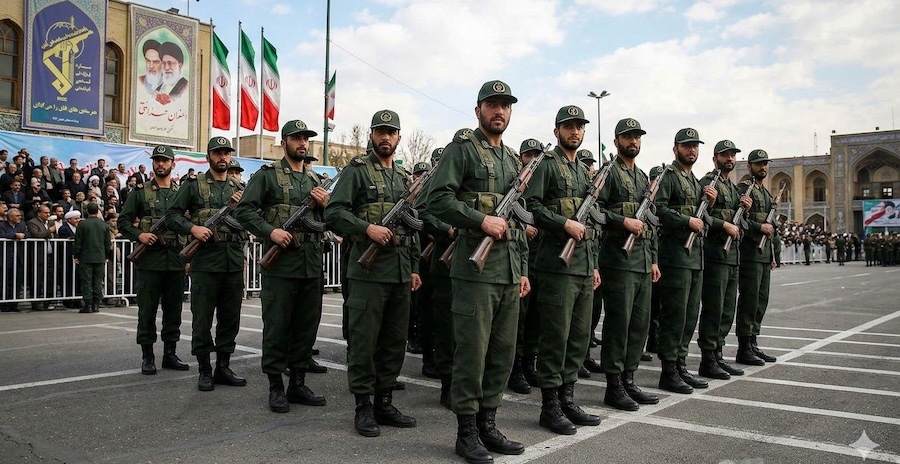
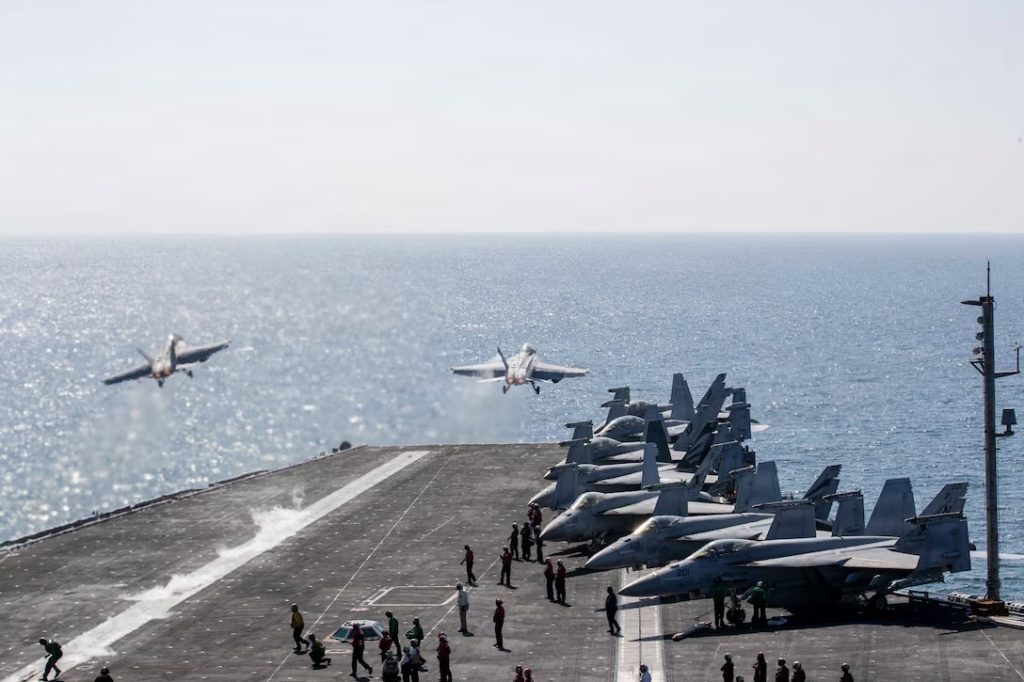
Just over a week into Operation “Lion’s Roar”—or its American version, Epic Fury—during which Israeli and U.S. forces launched a combined offensive against Iran, the other side is already counting massive losses. The Israeli Air Force alone has completed hundreds of strike sorties since the war began, targeting launchers, defense systems, weapons depots, and numerous infrastructure sites belonging to the Revolutionary Guards and the Iranian regime.
The scope of the strikes, from the Israeli side alone, is double that recorded during the 12-day war last June. Combined with the tremendous force the U.S. has brought to the region, we’re talking about thousands of strike sorties and dozens of munitions dropped so far on strategic sites in Iran, with emphasis on the bombing and destruction of Revolutionary Guards (IRGC) infrastructure—which has sustained a severe blow that damaged its military, logistical, and no less importantly, economic capabilities. In many cases—naturally so in a regime defined by dozens of countries as a terror regime—the targets overlap, and the resources at the Revolutionary Guards’ disposal serve both military and economic purposes.
Last night (Saturday) at midnight, the IDF announced a particularly interesting strike that occurred on the outskirts of Tehran—fuel depots that served the Revolutionary Guards. “The military forces of the Iranian terror regime directly and frequently use the fuel tanks to operate military infrastructure, and through them the Iranian terror regime transfers fuel to various consumers, including military bodies in Iran,” stated an IDF spokesperson’s announcement issued in the dead of night.
This was the first strike on oil depots after more than a week of war—a strike that later proved to be large and powerful, involving the destruction of approximately 30 oil depots. According to the Iranian news agency ‘Fars,’ additional oil depots were attacked across the country—in Kohak, Shahran, and Karaj.
This isn’t just a severe military blow to the senior command echelon of the Revolutionary Guards—the body that de facto runs the country today after the elimination of Supreme Leader Khamenei. It’s also a severe economic blow to a massive financial apparatus that until recently generated tens of billions of dollars annually for the Iranian terror organization.
A Terror Conglomerate
The budget of Iran’s Revolutionary Guards (IRGC), the country’s most powerful military body on which the theocratic regime has relied since the 1979 Islamist revolution, is estimated at many billions of dollars per year. In 2022, an assessment was published estimating its total annual budget at approximately $22 billion—nearly double the budget of the entire Iranian army.
More conservative estimates, particularly those derived from recent years and focusing on the organization’s direct budget, point to an annual budget of approximately $6 billion—an enormous sum in local terms. But these are only the direct revenues. Indirectly, the IRGC operates as a conglomerate with tentacles controlling entire sectors and numerous businesses in the country, generating extra-budgetary revenues estimated at tens of billions of dollars.
The massive portfolio is valued at hundreds of billions of dollars, including holdings in private companies and numerous real estate assets, and almost absolute control over an entire spectrum of sectors—transportation, communications, infrastructure and telecom, finance, insurance and banking, and of course energy—where the Revolutionary Guards’ grip is expressed primarily in a firm hold on the country’s massive gas and oil sector.
A report published by Reuters news agency in December 2024 revealed that the Revolutionary Guards deepened their control over Iran’s oil exports, with oil allocated directly to the IRGC and from there also to the Quds Force—which finances all the region’s terror organizations. The country’s total revenue from oil exports reached approximately $50 billion that year, despite the strangling sanctions imposed by Western nations.
According to the same report, which cited various sources, the Revolutionary Guards control no less than half of the country’s total oil export revenues—a stake that has jumped 20% in the past three years and translated into enormous revenues of tens of billions of dollars annually.
Overall, according to expert estimates, the Revolutionary Guards organization controls a massive share of the local economy, estimated at approximately 20% to 40% of the gross domestic product (GDP). This control is exercised partly through holdings in hundreds of subsidiaries, funds, and foundations, creating an extensive network of businesses that generate enormous sums for the organization’s members, which for years have been channeled to its military strengthening and financing proxy terror organizations throughout the region.
A Financial Empire of Evil
From the IRGC’s enormous budgets, at least $2 billion is channeled directly each year to the Quds Force, the secretive elite unit through which Iran’s terror regime has trained and financed terror organizations and Islamist extremists worldwide for many decades, all for “the noble cause”: exporting the Islamic revolution.
According to updated assessments by intelligence sources we’ve spoken with previously, even after the U.S. withdrawal from the Obama administration’s failed nuclear deal, during the sanctions period that caused the Iranian rial to collapse—the Revolutionary Guards continued to budget the Quds Force with many billions.
From these budgets flowed hundreds of millions of dollars to Hezbollah, Hamas, and a host of other terror organizations, from Hamas and Islamic Jihad in Gaza and the West Bank to the Houthi rebels in Yemen. Hezbollah enjoyed until recently an annual flow of approximately $700 to $800 million in cash and cash equivalents. In the past year, the cash flow to the Shiite-Lebanese terror organization was even increased to approximately a billion dollars.
“Iran is an empire of evil operating on two fronts simultaneously—developing nuclear capabilities and supporting terror organizations,” Major General (Ret.) Amos Gilad told us in a previous interview for the publication of Forbes Israel’s Richest Terror Organizations in the World project.
According to the senior general, who has many years in senior positions in Israel’s security establishment, terror financing has been carried out by the Iranians for many years, throughout the entire Middle Eastern arena and directly. Whether through financing Hezbollah in Lebanon, the Houthis in Yemen, or Shiite militias in Iraq and essentially—”anywhere they identify failed states.”
Beyond suitcases loaded with dollars or enormous sums transferred through underground networks of money changers, the ayatollah regime ensured a continuous and ongoing supply of weapons, ammunition, and advanced combat means worth many billions. “The value of security assistance the Iranians transferred to Hezbollah in the past decade is estimated at billions of dollars,” he assessed at the time.
This entire financial and economic operation was recorded at the expense and on the back of the Iranian taxpayer, who in recent years has groaned increasingly under galloping inflation and colossal erosion in the value of the local currency. That severe economic distress was the trigger that ignited the massive protests across Iran last January—and its ultimate results, possibly the collapse of the ayatollah regime and with it the strangling grip of the tyrannical and murderous Revolutionary Guards regime—are still too early to predict.