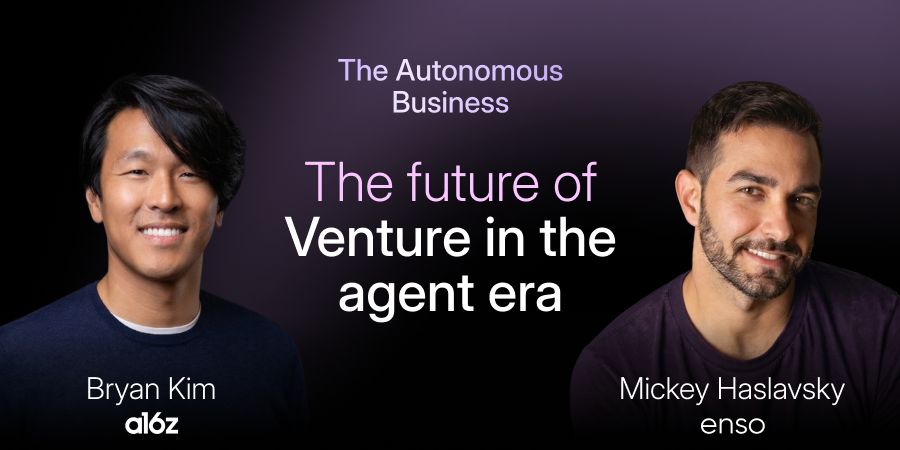
Bryan Kim is a partner at Andreessen Horowitz, where he leads the firm’s consumer AI investing. His portfolio reads like a map of where AI meets daily life: ElevenLabs in voice, Function Health in diagnostics, Captions in video, Cluely in productivity. Before A16Z, Kim was one of the early operators at Snap, joining ahead of the IPO and helping scale the company from startup chaos to a public company with a 70-person finance team. Along the way, he sourced the acquisitions behind some of Snap’s most iconic features, including Looksery (the engine behind AR Lenses) and Bitmoji. He later served as CFO at Bungalow and co-founded Uncommon Projects, an operator-led seed fund.
But the job Kim does today at A16Z barely resembles the one he started nearly six years ago. “It almost splits in half,” he told me on the Autonomous Business Podcast. “There was a pre-ChatGPT moment and a post-ChatGPT moment.” In the first era, Kim was focused heavily on retention: benchmarking product metrics and backing founders whose products showed once-in-a-decade stickiness. That playbook still has merit, but AI forced him to rewrite large parts of it. “It is possible that we’re at an era similar to the verge of an industrial revolution,” he said. “The underlying technological shift is massive.”
Before ChatGPT, Kim looked for products where the data did the convincing, retention curves so steep they were the pitch. Now he wants something different. “The type of founders I’m drawn to are the ones on the bleeding edge,” he explained. “When OpenClaw or a new model drops, they can talk about it. They have a Mac Mini set up running workflows. They’re writing long tweets about what they did and how it worked.” He’s become far more forgiving about product polish. “It is okay that it’s kind of wobbly. But isn’t it magical that a version of it could happen?”
I pushed back the way any founder would: if you’re investing in curiosity rather than proven metrics, how do you evaluate a company when the landscape shifts every two months? “We struggle with it,” he admitted. “Pivot is almost a wrong word now,” Kim reflected. “It’s more like, okay, a net new thing came out” and the company simply adapts its shape around it. He pointed to ElevenLabs, where founders Mati and Piotr made a conscious decision many months ago to evolve beyond audio AI into agents. “They’re probably ahead,” he said. “We’re just starting to see the fruit of that decision.” Marc Andreessen has a more elegant framing: the OODA loop. Observe, orient, decide, act, then do it again, faster than everyone else.
Vertical vs. Horizontal: Why Agents Make the Distinction Irrelevant
The venture world has spent two years agonizing over horizontal versus vertical AI. Kim’s view is more unsettling than either camp would like. “I don’t know if you fully grok the implications of it,” he said. “Agents have the ability to go find tools and add themselves to them, whether it’s MCP or CLI. The tool knows how to go actually make itself better, rewrite the program, shape-shift almost into the use case that you’re using for.” That threat applies equally to horizontals and verticals. So what survives? “Forget which business model will work for a second,” Kim said. “If there’s an entity whose business is to bring you results again and again, whether it’s agents or humans, at a margin that makes sense to you and them, that’s a good business.”
When the cost of building drops to near zero and every founder has the same tools, Kim quoted William Gibson: “The future is already here. It’s just unevenly distributed.” Even today, founders have wildly different levels of AI adoption. “Some would say, it’s writing 90% of my code. Others have a team of ten and they’re just starting to adopt agents.” He pointed to OpenClaw’s creator: “He calls it an overnight success, but he tinkered for years,” stitching together existing tools in a way nobody else had imagined. “Creativity, the tinkering, the craft, and being on the edge, matters so much.”
From Per-Seat to Per-Outcome, and the Metrics That Don’t Exist Yet
Kim’s financial background (he was CFO at Bungalow, a founding GP at operator-led seed fund Uncommon Projects, and began his career as a banker at Credit Suisse) gives him a sharp lens on SaaS economics. His thesis: the industry will shift from per-seat to per-outcome pricing, and as agents drive the marginal cost of outcomes toward zero, customers will demand lower prices, compressing margins and reshaping how markets value software.
When I shared that one of enso’s customers, an $80 million ARR company, had asked why we weren’t pricing our autonomous SEO engine on outcomes, Kim drew a parallel to digital advertising. “We priced ads on a CPM basis for almost a decade,” he recalled. “Then CPC, then CPI, and eventually you could bid on your goals.” That journey took over ten years. Kim believes agent-based businesses are at the very beginning of the same arc. And the punchline is encouraging: once the ad industry cracked outcome-based pricing, the TAM exploded. “If I know I’m going to get X and I know I’m going to pay less than X, I’m good. Let’s keep going.”
But if per-seat metrics are dying, what replaces them? Kim admitted he’s genuinely lost. “When agents start to use products, what does retention even mean?” He illustrated the problem with a thought experiment: imagine you’ve set up an agent (he named his “Greg”) and told it to handle tasks. Greg runs around consuming tokens, messaging you on WhatsApp. “And your API bill is now a thousand dollars. And all I did is I delivered you some paragraphs to put on Twitter. You dumb Greg, what have you done?” The metric he’s circling is “output per token,” the value delivered relative to compute consumed. “At the end of the day, why do you have agents? Because you want a result. Token, to me, is a proxy of cost and efficiency.” It’s probably the most fascinating time in the history of tech. We’ll have to reinvent all of it.
Underlying all of Kim’s thinking is a macro thesis: demand for intelligence outstrips the current supply, and the gap may be functionally infinite. “One could have said, electricity, light bulb, that’s cool. But is it a better candle?” he said. “And then we may look at an agent and be like, is that a slightly better computer? Maybe. But the achievable value of these things is harder to estimate from the prior generation.” Companies are going from zero to a hundred million in revenue in a single year. Labs are adding billions. “Because the potential demand is infinite, any route into that intelligence layer that makes sense for people, people are buying and using the damn thing.”
Mickey Haslavsky, enso’s CEO and host of this podcast, made a point that stuck with Kim: we tend to think in limited terms, limited workforce, limited intelligence, limited market space, but when new technology arrives, it almost quadruples the demand because so much more becomes possible. Kim sees it the same way. “I feel very privileged to see some legends in the industry pounding the pavement,” he said. “And yes, that’s competitive. But I look at that and I see it as a privilege. It’s frankly never been a more exciting and busier time to be an investor. I am drowning in news. I am also trying to catch up.”
The investors and founders who will shape the AI era will not be the ones holding onto old frameworks, but the ones comfortable operating through uncertainty. The old playbook rewarded polish and predictability. The new one rewards curiosity, speed, and the confidence to ship before everything is fully clear. In Kim’s view, demand for intelligence is effectively limitless, and every layer of the stack, from pricing to product to distribution, will be rebuilt around that reality. The real question is who can move fast enough to capture it. “We’re all running,” Kim told me, “because of love of the game and love of what’s happening right now.”
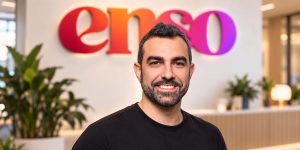
Mickey Haslavsky is the Founder and CEO of enso, where he is building autonomous business engines that replace traditional agency workflows with AI agents. A Forbes Israel 30Under30 alumnus, Haslavsky previously founded Rapid, which was acquired by Nokia. He hosts the Autonomous Business Podcast, where he sits down with the founders and investors reshaping how companies operate in the age of AI.