
In early 2025, Dean Leitersdorf was named to Forbes Israel’s 30 Under 30 list for his work at Decart (Decart.ai). At the time it was a young AI startup that had raised $53 million at a valuation of a few hundred million dollars. Less than two years later, he has signed the largest exit in the company’s short history. It is also one of the largest exits Israeli tech has ever seen.
On Monday, Amazon announced it has signed an agreement to acquire the proprietary technology behind the Decart Optimization Stack (DOS), the startup’s AI optimization platform. Under the agreement, Decart’s three co-founders will join Amazon along with the company’s team of AI researchers and engineers. The founders are Dean Leitersdorf, Moshe Shalev and Orian Leitersdorf, Dean’s younger brother. Amazon did not disclose the terms, but Bloomberg reported the deal is worth about $7.5 billion.
According to reports, the agreement was signed Sunday night, and Amazon will pay in cash and stock over several installments. Amazon said the deal is subject to customary closing conditions, including regulatory clearance. The company said Decart’s technology will help it further optimize inference and strengthen the performance of its custom silicon, so that customers can train and run AI models faster and at lower cost on its Trainium chips. Amazon added that it has been working with Decart since 2025.
“Every leap forward in AI starts with getting more out of every chip,” said Peter DeSantis, Amazon’s senior vice president of foundational AI models, custom silicon and quantum computing. “From day one, our mission has been to redefine the boundaries of what AI can do,” said Leitersdorf. He added that “joining Amazon gives our team the scale, the customers, and the infrastructure” to pursue that mission faster.
The deal ends a saga that began in August, when it was first reported that Decart was in talks to sell. Days later, Bloomberg reported that Anthropic was in talks to acquire the company for about $6 billion. According to reports, the two sides had already exchanged drafts and Anthropic had effectively completed due diligence. In early September, however, Anthropic walked away. Decart then reportedly tried to revive talks with Nvidia, an existing investor that had sought to negotiate an acquisition before Anthropic entered the picture. The next suitor was Amazon, which said yes. In October, The Wall Street Journal reported that Amazon was in talks to buy Decart for about $7 billion.

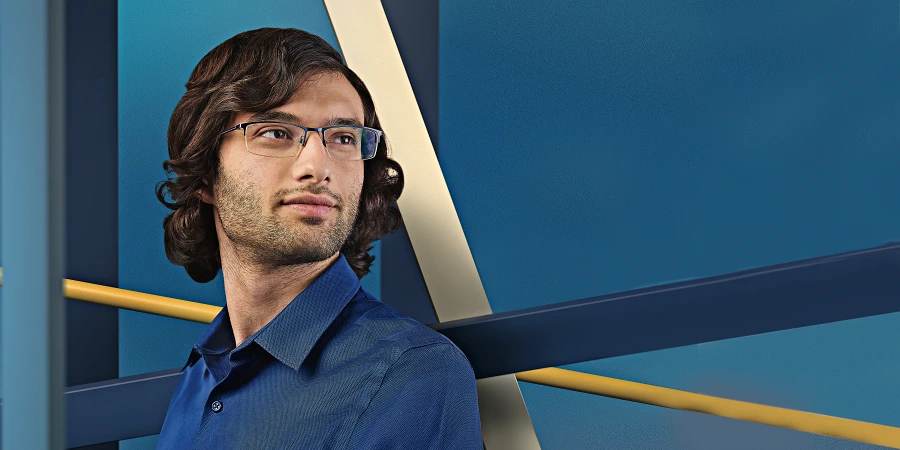
Caption: A 2025 30 Under 30 alumnus lands a blockbuster exit. Dean Leitersdorf | Photo: Rebecca Wilkowski Photography
Decart is also known for two flagship models. Lucy edits live video in real time. Oasis generates simulated environments for training and testing robotics and autonomous-driving systems. The deal comes about six months after Decart announced a $300 million round led by Radical Ventures, in which Nvidia invested for the first time. The Wall Street Journal reported that the round valued the company at nearly $4 billion.
A Rapid Climb
Dean Leitersdorf and Moshe Shalev, Decart’s chief product officer, founded the AI research and development lab in late 2023, as the war broke out. Their goal was to make training and running AI models more efficient. Within a short time they unveiled a platform that lets companies train large models 10 times more efficiently, making the whole process faster and, above all, far cheaper. For the tech giants that pour billions into this every year, that meant enormous savings and a real revolution in costs. Its early investors were Benchmark, Sequoia Capital and Zeev Ventures, the venture firm of serial entrepreneur and billionaire Oren Zeev, which led the seed round. To them, Decart was a goose they expected to lay especially large golden eggs. The bet paid off, and then some.
Within a year of its founding, the company had tens of millions of dollars in revenue, major customers and a million users on Oasis, the AI-powered video game it launched right after its first round. That pace made Decart a natural candidate for Forbes Israel’s list of promising startups. In August 2025, Decart was named to Forbes’ global Next Billion Dollar Startups list. Within days, it became a unicorn valued at more than $3 billion after closing a $100 million round. Less than a year later, and just six months after another $300 million round with Nvidia at a $3.1 billion valuation, the company built by the Leitersdorf brothers and Shalev is selling for more than double that.
“We are one of the strongest AI companies in the world today,” Leitersdorf said confidently at the time, in an interview with Forbes Israel marking his selection to 30 Under 30. “We are definitely the strongest in the world at running models very efficiently,” said the CEO and founder of what was then a startup still in its infancy.
From Big Promise To Breakneck Acceleration
Leitersdorf, 28, was born in Mevaseret Zion, just outside Jerusalem, and his childhood was a journey between cultures. He spent most of it abroad while his parents served on diplomatic postings. In Israel he attended international schools. He moved between an American school in Lausanne, Switzerland, and the Zionist Youth Farm in Israel. In high school he got a firsthand taste of Silicon Valley’s ferocious competitiveness, which pushed him to finish his last two years of high school in Palo Alto in a single year.
That left him exactly one year before his military service to squeeze a four-year undergraduate degree in computer science at the Technion into one. “They warned me not to do it,” he once told Forbes Israel. “I answered simply: the end result will be very binary. It will either crush me or launch me. Either I fail or it works. And if it works, it will be insane! Luckily, it really did work.”
He began studying computer science at the Technion at just 17. He went on to complete three degrees, including a PhD, in just 11 semesters, and received his doctorate at 23, another record. He graduated with the President’s Award for Excellence and a 98.2 grade point average, still among the five highest in the institution’s history.
At 19 he enlisted and was placed in ARAM, considered the most elite and prestigious track for cyber researchers in the Israeli Intelligence Corps. He later served as a technology researcher in Unit 8200, where he won the Israel Defense Prize. It was also there that he met the man who would become his co-founder at Decart. “All the great minds today go to either Google or Facebook, and in my view they are the reason Israel is falling behind in AI,” he warned in that interview. “They hire the smartest talent so that startups won’t be founded. The important problems are worked on in Palo Alto. Here in Israel, they give them the junk problems to solve.”
“Everything in the unconventional life of young entrepreneur Dean Leitersdorf moves at breakneck speed,” we wrote at the opening of his profile, published in the 30 Under 30 issue in March 2025, “and so does the company he founded.” We concluded: “There is no doubt Dean Leitersdorf knows how to draw a vision and how to articulate goals – and ‘aiming high’ is an understatement for him. Now the burden of proof is on him.” For now, it looks like he has delivered, in every sense of the word.