
Impatience is visible everywhere in Israel. Hundreds of air‑raid sirens over five weeks, coming after two and a half years of near continuous fighting, take a severe psychological and physical toll even when no missile lands nearby. When the image in the public imagination is the collapse of the Iranian regime and its replacement by a pro‑Western government, anything short of that is immediately framed as failure. Impatience is human. It becomes dangerous when it hardens into a strategic argument – one that treats stopping the war rather than solving the problem that triggered it – as the overriding goal.
The contradiction is glaring. Many of those who demanded a political process from day one were the first to criticize Trump the moment a ceasefire was announced to allow talks to begin. Before negotiations even started, they were already warning that they would end badly.
No one knows how long the ceasefire will last, or what kind of agreement – if any – will emerge. One thing is clear: Iran needs this pause far more than either the United States or Israel. Tehran will search for a formula that halts the bombing while preserving its grip over the Strait of Hormuz, its enriched uranium, and its ballistic missile arsenal. It is far from certain such a formula exists.
Donald Trump’s return to the White House marked a clear revival of great‑power politics. Long before inauguration, he discarded the liberal moral vocabulary that dominated U.S. discourse for decades and returned to core concepts of the Cold War era: rival blocs, spheres of influence, sovereignty, borders, and loyalty
Even now, after five weeks of watching the war unfold in real time, most of the critical questions remain unanswered. Has the regime been hit hard enough to relinquish its nuclear ambitions and material? Will Iranians take to the streets and attempt genuine regime change, or will the clerical establishment adapt and survive? It is unclear whether anyone truly knows. One fact, however, is beyond dispute: the regime in Tehran continues openly and repeatedly to declare its desire to destroy Israel. Anyone who believes it would surrender its strategic assets absent sustained military pressure has not been paying attention.
While we all wait for things to clear up, three lessons from the Second Iran War already stand out:
1. Iran Was Hit Hard – but It Is Still Standing
By any objective measure, five weeks of fighting constituted a significant – if incomplete – success. Iran’s Supreme Leader was killed, along with the commander of the Revolutionary Guards and dozens of senior figures. Much of Iran’s air‑defense network, most of its naval and aerial assets, and dozens of military‑industrial facilities were destroyed. A substantial, though still unquantified, portion of its missile launchers and ballistic missile stockpiles was neutralized. Roughly 20,000 targets were struck across a country whose territory equals that of Germany, France, Spain, and Italy combined.
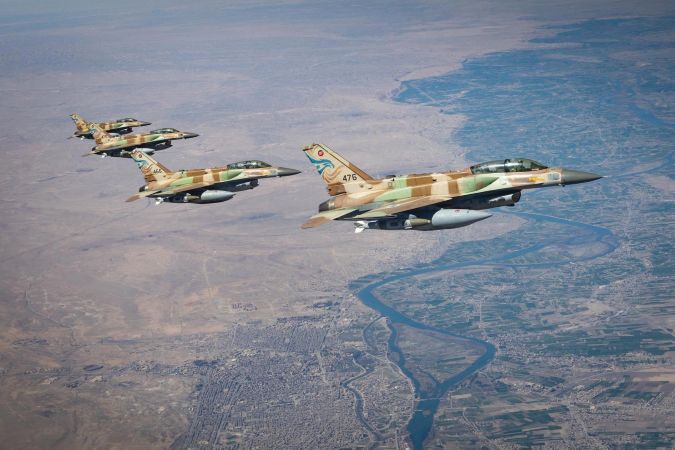
The almost casual reception of reports describing Israeli air sorties over Tehran says everything. Iran behaved less like a regional great power and more like a heavily armed terrorist organization – capable of sustaining fire over time, but unable to defend its core assets from an adversary operating 2,000 kilometers away. Israel operated in Tehran much as it has in Gaza. And this is before accounting for U.S. strikes, which carried out the bulk of the destruction. Washington lost several aircraft but systematically dismantled infrastructure Iran had built over decades in preparation for just such a conflict.
The cumulative effect is unprecedented. Iran’s military suffered blows it had never previously endured. The Gulf states now clearly recognize that Iran represents an existential threat, and the postwar regional order will reflect that understanding. Israel, having demonstrated that it is the strongest military actor in the region by a wide margin, is positioned to play a central role in shaping that order.
The United States, too, appears to have drawn firm conclusions. Of all its regional partners, Israel proved to be the only ally willing and able to act decisively. Gulf states spent hundreds of billions of dollars on American aircraft and weapons systems but hesitated to use them. And the Europeans? They have become a pale shadow of their former selves.
Yet Iran is far from neutralized. It closed the Strait of Hormuz, sent global oil prices soaring, and attacked more than a dozen countries despite a month of intense bombardment. It retains hundreds of kilograms of enriched uranium and hundreds of centrifuges concealed at undisclosed locations. The nuclear threat, in other words, is still very much real. And it is certainly a possibility that any new regime would be even more radical, especially as it struggles for survival. This is the starting point from which negotiations will begin.
No one knows how long the ceasefire will last, or what kind of agreement – if any – will emerge. One thing is clear: Iran needs this pause far more than either the United States or Israel
2. The War With Iran Is Not Only About Iran
Donald Trump’s return to the White House marked a clear revival of great‑power politics. Long before inauguration, he discarded the liberal moral vocabulary that dominated U.S. discourse for decades and returned to core concepts of the Cold War era: rival blocs, spheres of influence, sovereignty, borders, and loyalty. Concepts such as inclusion, diversity, and universal moralism were sidelined as Washington refocused on restoring power and weakening competitors.
Within a year, Trump moved aggressively in the Western Hemisphere – reasserting control over the Panama Canal, taking over Venezuela, pressuring all regional governments to reconsider ties with China, and openly hinting that Cuba would be next (“but don’t tell anyone I said so,” he jokingly told a large audience last week).
While his bid to bring Greenland under American control has so far failed, he has made tangible progress in breaking China’s decades-long monopoly over critical raw materials. By backing peace agreements in Africa (Rwanda–Congo), Southeast Asia (Thailand–Cambodia), and the Caucasus (Azerbaijan–Armenia), Washington secured access to key minerals and trade routes. Trump’s tour of the Persian Gulf last May, which yielded deals worth hundreds of billions of dollars, further re‑established U.S. dominance in a region where China had made tentative inroads during the Biden administration.
Iran fits squarely into this broader campaign. Beyond its nuclear and missile programs, it is a strategic linchpin of the China–Russia axis. Tehran supplies China with energy, provides Russia with critical weapons, and sits astride trade routes linking East Asia to Europe. Weakening Iran strips Beijing of a major lever over the West.
In practice, Trump’s approach mirrors Israel’s post–October 7 strategy: not a frontal assault on the “head of the octopus,” but the patient dismantling of its proxy arms across multiple arenas, steadily eroding strategic depth. Actions in Latin America, the Caucasus, the Persian Gulf, Africa, and Southeast Asia form a coherent pattern – advancing U.S. interests while constricting those of China and Russia ahead of a potential future confrontation.
For Beijing, this is unfamiliar territory. For decades, China expanded quietly, built a global web of influence, and operated with a clear sense of how the West would respond – or more often, would not respond – to its actions. Now it faces an America that no longer offers free access to markets, resources, or security without demanding a price. It is dealing with a President willing to change the rules abruptly – and then change them again. As a result, and for the first time in years, Beijing is being forced to stop, reassess, and calculate against a United States that no longer hands out free gifts.
3. Western Europe: a Great Power in Name Only
Two weeks before the war began, at the Munich Security Conference, Secretary of State Marco Rubio asked European leaders a blunt question: what values are you willing to fight for? Their answer, given this month, was unequivocal: none.
When the war broke out, Western Europe refused – unanimously – to confront one of the darkest regimes on the planet. Not when Iran pursued nuclear weapons. Not when it fired on an EU member for the first time (Cyprus). Not when it attacked a NATO member (Turkey). Not even when it choked off oil exports to Europe itself.
British Prime Minister Keir Starmer declared, “This is not our war”. Even if he had wanted to intervene, it is doubtful he could have: the British Navy, which once “ruled the waves,” is left with virtually no combat‑ready warships. French President Emmanuel Macron called for an immediate ceasefire within hours of the first strike and later refused to allow U.S. aircraft carrying supplies to Israel to transit French airspace. Spain went further still, barring U.S. aircraft en route to Iran from using its skies.
These are the same leaders who rush anxiously to Washington whenever Vladimir Putin flexes his muscles in Eastern Europe. Yet they refused to take part in any meaningful way in a war against Iran. In doing so, they may have achieved what Putin has failed to accomplish for twenty‑five years: effectively hollowing out NATO in its current form. Trump’s reaction last week was telling: “we don’t need NATO,” he said, “but we will not forget this”.
Only a year ago, Trump forced NATO members to raise defense spending to five percent of GDP after decades of maintaining hollowed‑out militaries and relying almost entirely on American protection for practically free. After their conduct over the past month, Europe’s great powers would be wise to prepare for a future in which they are expected to fend for themselves.