

In 2016, Salt Security Co-founder and CEO Roey Eliyahu spotted a risk few others were focused on.
As the internet evolved and companies became increasingly dependent on APIs to power their digital services, he recognized that vulnerabilities hidden in those interfaces would soon become one of the most significant threats facing businesses across every sector.
Together with Co-founder and COO Michael Nicosia, Eliyahu built what would become the first dedicated platform for securing API-driven systems, and more recently, the AI agents and MCP servers now powering the next wave of automation. The platform uncovers shadow MCPs, maps AI-driven API traffic, and blocks the logic-based attacks fueling modern breaches.
Fast forward to 2025: Salt Security is valued at $1.4 billion, backed by more than $270 million from investors including Sequoia Capital, CapitalG, Y Combinator, and others. The company’s early trajectory was shaped in part by a meeting in Silicon Valley with Sam Altman, years before he would help launch OpenAI. Altman immediately understood the scale of what API growth would mean and invested through Y Combinator.
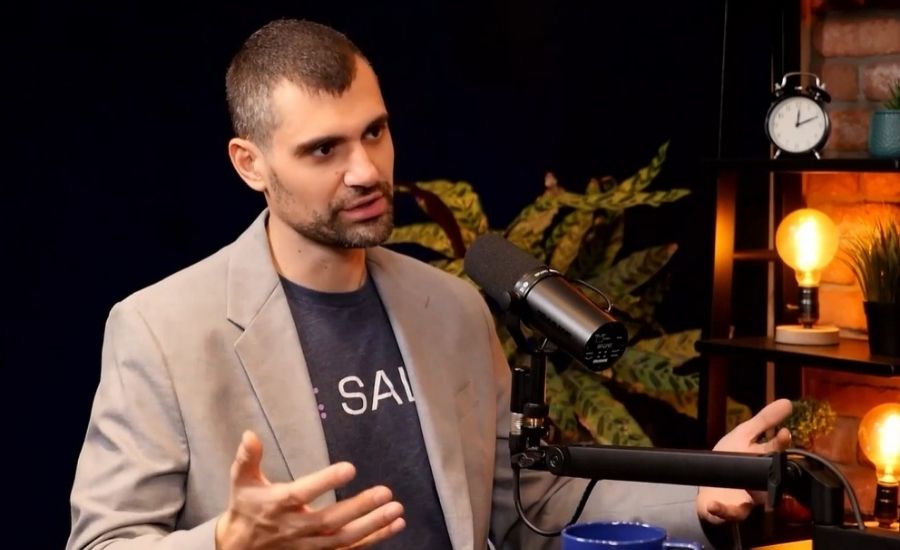
According to Eliyahu, Altman saw the appeal in protecting APIs, application programming interfaces, which allow different software programs to communicate with each other. Think of its most successful product: ChatGPT. It has 856 million monthly users and effectively acts as an agent that helps connect each of those to different clients and servers every day.
“He saw that APIs are going to drive every business in the world,” Eliyahu said. Today, estimates suggest APIs account for roughly 80% of web traffic, only expected to surge as agentic AI accelerates automated interactions between systems.
“If a company in the early 2000s had 10 APIs, by 2010 they probably had 500 to 1,000,” Eliyahu explained. “In 2016, it became around 5,000. Today, with AI agents, it’s growing every month. By the end of next year, a company with 5,000 APIs may have closer to 50,000.”
Agentic AI, tools that autonomously connect, orchestrate, and act between products and services, has turned API security from a niche discipline into a foundation of enterprise protection. Salt didn’t just ride this wave; it helped define the modern category.
“I had the thesis… [but] I never even imagined what’s going on with agentic AI that’s even exploding that space even more,” he added.
Despite its scale as a global unicorn, Salt maintains a relatively lean team of 150 people and a culture built around experimentation. Eliyahu says that spirit is central to its success.
“We really encourage a culture of entrepreneurship,” he concluded. “Every employee in the company can be an entrepreneur. Anyone can bring an idea. It doesn’t matter your seniority or how long you have been with the company. If you have a great idea, we encourage people. We’re going to judge it based on the merit of the idea, not about anything else.”
Our conversation ended with a quickfire round where Eliyahu shared personal interests, hobbies, and aspirations beyond the tech world.