
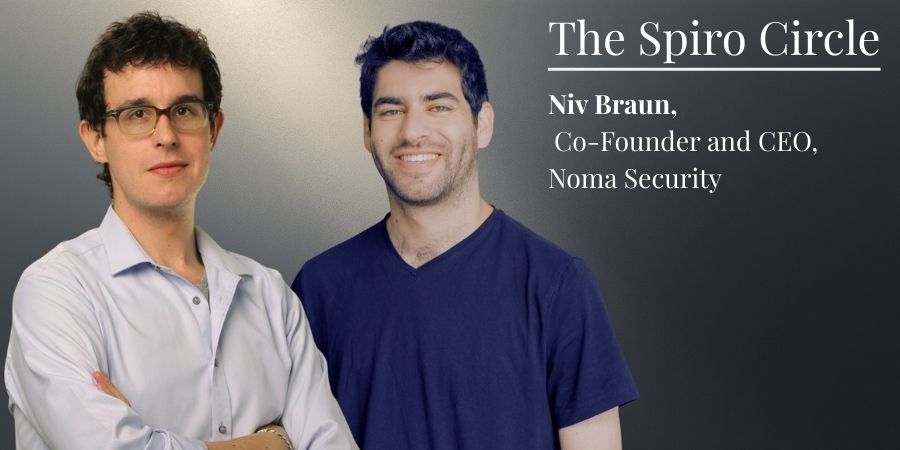
In the AI boom, speed is being celebrated. Funding rounds are closing quickly, teams can double in quarters, and products ship before the market has time to catch its breath. But for Niv Braun, co-founder and CEO of AI security company Noma Security, the real challenge isn’t how fast a company grows, but about it’s what breaks when it does.
“One of the biggest challenges in a fast-moving and fast-growing company is how you grow the team very fast and in a way that will be aligned with the great business growth that we see,” Braun told me. “At the same time, keeping the culture.”
Noma is better positioned than most to understand this problem. Founded in 2023, the company has already raised $123 million, including a $100 million Series B, and works with some of the world’s largest and most regulated enterprises. But the speed at which the company grows can be detrimental if not managed correctly. “The moment that you move in a quarter from 40 to 70 or 80 people,” Braun added, “it could completely change the dynamic of the company.”
When I spoke to Braun, he described culture as being nurtured and defended through this growth, starting with the hiring process. “Sometimes we see the most amazing talents in all areas,” he explained. “But we don’t think that they’re going to be completely aligned with the Noma culture. And this is why we think that it’s not a good fit.” It’s not about ability ot background, but finding pieces that can glue together. “I don’t think that it’s because we are better than them… I just think that there are two different puzzles,” he added.
The Cultural Pillars For Success
That discipline is built around three cultural pillars. The first is what Braun calls a winning mentality. “Winning mentality is the state of mind,” he says. “They know how, in crunch time, to do the right thing, to take the right decisions under pressure.”
The second is radical ownership. “People that take a topic end to end,” Braun said, describing a culture where engineers influence marketing, sales teams shape product strategy, and silos are actively discouraged.
The third is an explicitly anti-blame environment. “It’s super collaborative and anti-blaming culture,” he concluded. Without it, Braun believes proactivity collapses, feedback shuts down, and growth becomes fragile.
This is particularly visible in how Noma handles failure. “On every POC that we lose,” Braun explained, “there are going to be lesson learning about it. Again, it’s not blaming, but it’s true learning together.” This environment isn’t helped by softening disappointment, either. “We don’t accept it,” he adds. “We make sure that it doesn’t happen, like never, again.”
The AI era could see technology resetting or pivoting every few months, and Braun sees culture as one of the few durable advantages left. “This is the only way,” he says, “to scale together with this DNA.”
Today, speed may get you noticed, and large funding rounds get you headlines. But as Noma’s growth aims to show, it’s the culture that will determine whether companies survive.