
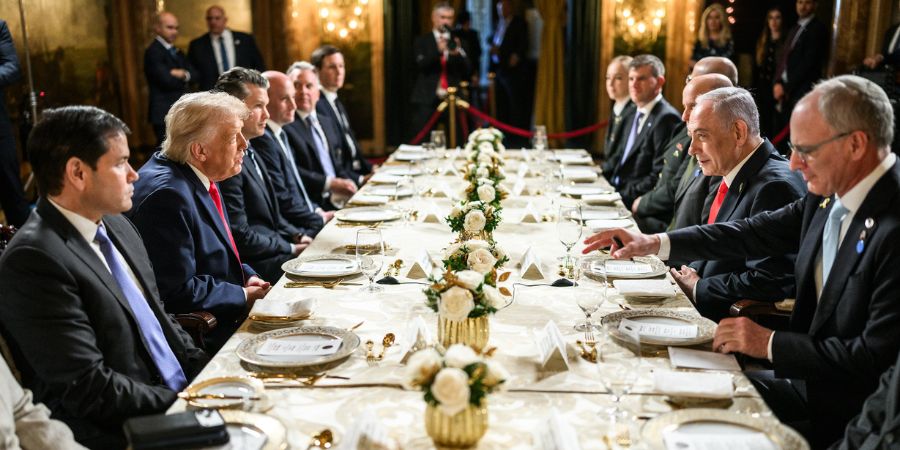
When you negotiate with Trump, you are not negotiating only about substance. You are negotiating about ego, public image, timing and narrative. Benjamin Netanyahu does not walk into the room to debate whether Iran should be prevented from becoming nuclear. The shared objective is clear.
The real negotiation challenge lies elsewhere: How do you influence a leader who defines himself as a deal maker? How do you raise the threshold of what is acceptable without appearing to obstruct the deal? How do you sharpen red lines without pushing your counterpart into a corner?
Two powerful leaders are negotiating here. But the signing pen rests in the hands of only one of them. And that is precisely where the strategic challenge begins. When your counterpart’s identity is built around closing deals, the negotiation is never just about policy details. It is about ownership.
Donald Trump’s brand, politically and personally, is anchored in being the ultimate negotiator. Any agreement with Iran must therefore align with that self-concept. It has to be framed as strength, not concession. As victory, not compromise. For Netanyahu, the challenge is not to oppose negotiations outright. It is to shape the definition of what counts as a “good deal” without appearing to obstruct the process itself.
In negotiation theory, this is influence under power asymmetry. In executive terms, the lesson is clear: you may not control the final signature, but you can shape the architecture of the decision long before the pen touches paper.
Raising The Bar Without Triggering Resistance
One of the most delicate moves in this dynamic is anchoring. Netanyahu’s insistence that any agreement must dismantle Iran’s nuclear infrastructure – not merely freeze it – operates as a strategic anchor. But anchoring is not just about the demand; it is about the framing. He does not position dismantlement as obstruction. He frames it as necessity.
In negotiations with dominant personalities, direct contradiction often triggers defensive escalation. The moment influence feels like opposition, resistance hardens. Sophisticated negotiators understand that standards are more powerful than objections. Instead of declaring, “This deal is insufficient,” they state, “A viable agreement must meet the following criteria.” The framing shifts from conflict to principle. Alignment is maintained, while the benchmark quietly moves upward.
Executives navigating complex partnerships face the same tension. The challenge is not to reject proposals outright, but to redefine what success requires – raising expectations without destabilizing the relationship.
Influence is rarely about overpowering. It is about alignment. When negotiating with a leader who values decisiveness and personal authorship, influence must leave room for ownership. The powerful counterpart needs to see the outcome as an extension of their strategy, not as a concession extracted under pressure. This is not flattery. It is structural intelligence.
If Netanyahu were perceived as the architect of a tougher American stance, the dynamic could quickly shift from coordination to defensiveness. But if elevated standards emerge organically within Trump’s own negotiating posture, both leaders retain strength – and the alliance remains intact.
In boardrooms, the same principle applies. Senior executives rarely embrace ideas framed as corrections. They embrace ideas framed as strategic accelerations of their existing direction. The art of influence lies in embedding your objectives inside the other party’s narrative – so that the decision feels authored, not imposed.
Managing Constraints Without Looking Weak
Both leaders operate under constraints. Netanyahu faces a security-sensitive electorate and regional volatility. Trump must navigate political optics, global market reactions and the credibility of American deterrence. Constraints can weaken negotiators – or strengthen them. Because no significant negotiation takes place at only one table. Alongside the visible discussion, there is always a parallel negotiation unfolding internally.
Netanyahu does not negotiate only with Washington; he negotiates with his coalition, the security establishment and public opinion. Trump does not negotiate only with Jerusalem; he operates within a system of advisors, party leadership, voters and global markets. This invisible layer is one many executives underestimate. Misalignment at home inevitably weakens leverage abroad.
That is why disciplined leaders prepare internally before they negotiate externally. They map stakeholders, surface intangible interests, define not only what they seek to achieve but also what must not happen, and ensure their red lines are institutionally backed. Those who manage the negotiation at home enter the room with authority. Those who do not find themselves negotiating under pressure rather than from strength.
The Real Negotiation
The negotiation over Iran is not only about centrifuges, enrichment levels or sanctions relief. It is about shaping perceptions of risk, strength and ultimately of what constitutes success. The most difficult negotiations are rarely with declared adversaries. They are with powerful allies whose decisions directly shape your exposure and strategic reality.
Influencing the influencer demands discipline, psychological acuity and strategic restraint. It requires recognizing that while the signature may belong to someone else, the architecture of the agreement can still be designed, calibrated and quietly influenced. In geopolitics, as in business, those who know how to negotiate with power – without confronting it – often determine the outcome long before the ink dries.
Yael Chayu is a global business negotiation expert, speaker, and strategic advisor to executives across industries. She is a doctoral researcher in Behavioral Economics at Reichman University, where she also serves as Academic Director of the Business Negotiation Program at FORE Executive Education.