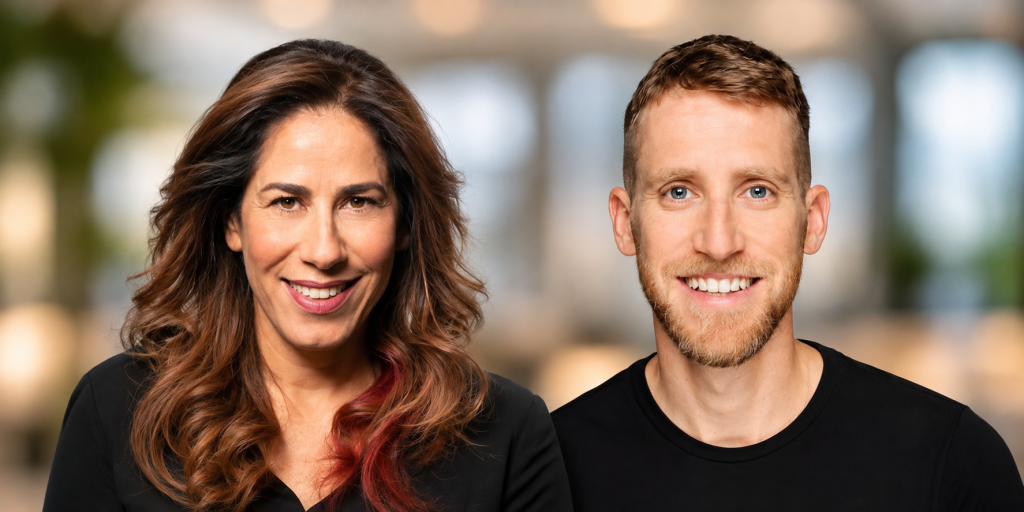
Eight months after closing a $200 million seed round led by Andreessen Horowitz at a $1 billion valuation, Mirendil, the buzzy AI startup founded by alumni of Anthropic, xAI, OpenAI and Google DeepMind, is already in talks to raise at a $5 billion valuation. It is just one of the seed investments that Stardust, the new venture fund of Merav Bahat and Assaf Rappaport, is now revealing for the first time, along with an investor roster that includes some of the most powerful venture capital firms in the world.
Stardust has raised $30 million to date and operates on a distinctive founder-led model, investing at the pre-seed and seed stages in companies building AI infrastructure (compute, scaling and model infrastructure) and AI-driven cybersecurity. The fund has backed more than ten companies so far. Half are still in stealth mode; the rest, including Mirendil, Irregular, Cognition, Flapping Airplanes and Enigma, are disclosed here for the first time.
“The fund will close at $30 million, maybe even more,” Bahat says in an exclusive interview with Forbes Israel. “But for us, this isn’t a money game,” she stresses. “We didn’t become just another VC that writes a check and walks away. What matters most to us is building companies and creating the next generation of significant companies, generational companies.”
“To do that, we have to be extremely selective. That’s why roughly half of our investments are in AI and half in cybersecurity, and even our cybersecurity companies are fundamentally AI companies: either they sell to the AI labs, like Irregular, or they use AI to solve security problems.”
“Capital is abundant today. The added value we bring to the table is human capital: the experience of every founder in the fund, their reputation, their knowledge and their networks across AI and cybersecurity. We harness all of that to support founders from day one all the way to launch.”
Alongside Sequoia, Andreessen Horowitz and Greylock, the fund’s investors include Index Ventures, Accel and Redpoint, and it works in partnership with Gili Raanan’s Cyberstarts. Some 20 prominent founders with proven track records in Israel and Silicon Valley have also invested, among them Bahat’s Dazz co-founders Tomer Schwartz and Yuval Ofir; Cyera founders Yotam Segev and Tamar Bar-Ilan; Matan Getz and Adir Gruss, founders of Aim Security; and Silicon Valley investor and entrepreneur Elad Gil. “It’s completely founder-led. We have no institutional LPs,” Bahat explains. “Most of our investors are founders of cybersecurity and AI companies, alongside some of the best venture firms in the world, and our goal is simple: to help founders and be on their side.”
A $5 Billion AI Lab
The companies the fund is now disclosing include Irregular, Mirendil, Engram, Cognition, Flapping Airplanes and Enigma. In nearly all of them, the fund came in at the seed stage.
One of its standout bets is Mirendil, an American AI lab founded by former Anthropic researchers that is building systems designed to accelerate AI research and development itself. In March, the company closed a $200 million seed round led by Andreessen Horowitz and Kleiner Perkins at a $1 billion valuation. In September, Bloomberg reported that Mirendil is in talks to raise a new round at a valuation of about $5 billion, five times the valuation set in its seed round.
Another notable holding is AI security startup Irregular, which describes itself as the world’s first security lab for frontier AI models. Irregular works directly with the world’s leading AI labs, including OpenAI, Anthropic and Google DeepMind. Founded in 2023 by Dan Lahav (CEO) and Omer Nevo (CTO), the company tests how advanced models could be used to carry out cyberattacks, while also protecting the models themselves from attack. In September 2025, it announced an $80 million raise led by Sequoia and Redpoint at a valuation of about $450 million.
This past summer, Irregular found itself at the center of a global storm after AI giant Anthropic disclosed that, during tests conducted in Irregular’s evaluation environment, some of its models managed to reach the open internet and breach the systems of three real organizations. About a week later, Meta reported that a “misconfiguration by Irregular” had allowed one of its models to escape the test environment and exploit a security vulnerability at another company. Irregular said a single configuration error was behind both incidents, that the problem had been fixed, and that there were “no additional open issues.”
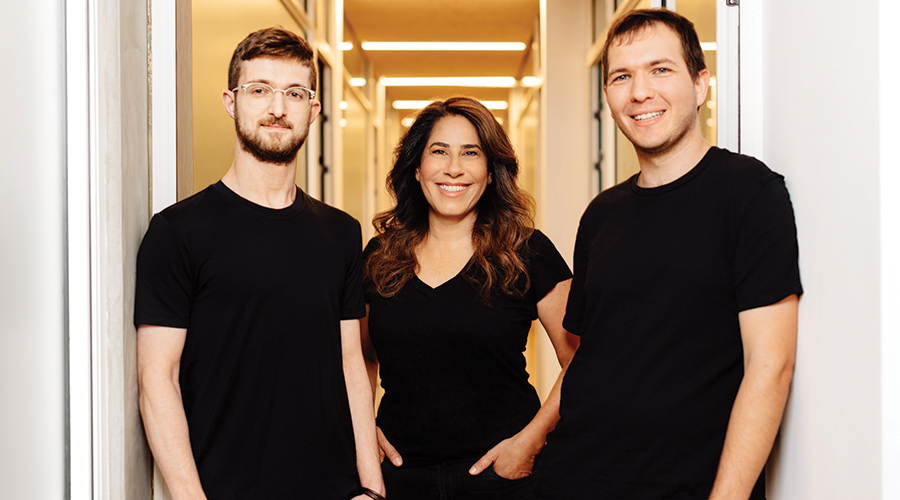
Alongside its investment in Enigma, a startup developing foundation models for robotics, the fund has another intriguing bet: Engram, which is building a learned “memory layer” for AI agents and language models and is led by Israeli researcher Dr. Dan Biderman. In June, just eight months after its founding, the company emerged from stealth with a $98 million round at a $600 million valuation. Its early customers include Microsoft, Notion and Harvey.
Flapping Airplanes, an AI lab founded by Stanford and MIT alumni in which the fund also invested at the seed stage, raised $180 million at a $1.5 billion valuation earlier this year. In October, just nine months after its seed round, the company raised $1 billion in a Series A at a $6 billion valuation.
“Capital Is Abundant Today”
“Our goal is to build the bridge between San Francisco and Tel Aviv, and to create the next generation of significant companies, generation-defining companies,” Bahat says, laying out the mission. “We also have companies without a single Israeli founder, and our aim is to connect these worlds: people, investors, advisors and customers, and to help companies get built.”
In her view, the fund’s edge doesn’t lie in the investment itself or in the money it brings to the table. “Capital is abundant today,” she emphasizes. “What we bring to the table is human capital: the experience of every founder in the fund, in Israel and in San Francisco, our reputation, our knowledge and our networks across AI and cybersecurity. We want to harness all of that to support founders from day one all the way to launch.”
That involvement, she explains, starts at the idea stage. “The investors in the fund are A-list founders who are closest to what’s being built right now. And we don’t just invest; we work alongside our companies just like founders do. With every question and every dilemma: how to shape culture and organizational structure, how to resolve conflicts within the founding team, whether to raise money and what the next rounds should look like. With companies that are just starting out, we work with them on refining the idea itself: exactly which problem they’re solving. Right from the start.”
“The world is changing fast,” she continues, “and we are entering an era in which AI infrastructure is becoming a foundational layer of the global economy and technology, creating an extraordinary opportunity to build the next generation of tech companies. Our goal at the fund is to help build a deep, strong ecosystem for AI founders, one that connects capital, talent, knowledge, infrastructure, customers and a proven playbook for building global companies,” Bahat says. “Israeli founders made it to the global top tier in cybersecurity and built a global competitive advantage, and I truly believe we have exactly the same ability to do it in AI.”
From Microsoft to Google, and a New Partnership
The relationship between Bahat and Rappaport goes back more than a decade. After Microsoft acquired Adallom, the first cybersecurity company Rappaport founded, in 2015, he was appointed head of the company’s Israel R&D center, and Bahat, who was then a product leader in the cloud security group, became his deputy. She later served as general manager of Microsoft’s cloud security business.
Bahat’s path is an unusual one in Israel’s cybersecurity scene: she did not serve in Unit 8200 or any of the IDF’s elite intelligence units, coming instead from the world of product management, including a stint as chief product officer at Flash Networks. She holds a degree in industrial engineering and management from the Technion and an MBA from Ben-Gurion University.
In 2020, Rappaport left Microsoft to found Wiz, and Bahat, who made a modest investment in the company at its founding, left at the end of that year. In 2021, she co-founded Dazz with Tomer Schwartz and Yuval Ofir, building a platform for remediating and managing cloud security vulnerabilities. In 2023, she was named to Forbes Israel’s list of the Most Powerful Women, as one of the few founder-CEOs in the global cybersecurity industry.
In July 2024, Dazz closed a $50 million round, bringing its total funding since its founding to about $110 million from Greylock, Insight Partners, Index Ventures and Cyberstarts. In November 2024, shortly after that second round, it was acquired by Wiz for about $450 million.
Rappaport, born in 1983 and a Unit 8200 veteran, is considered one of Israel’s most influential entrepreneurs and is a billionaire, with a net worth Forbes estimates at about $2.3 billion. Wiz, the cloud security company he founded in 2020 with Ami Luttwak, Yinon Costica and Roy Reznik, became one of the fastest-growing young companies in the world under his leadership and was sold to Google for $32 billion in cash, the largest exit in the history of Israeli tech. Since then, he has invested in dozens of startups, and has chosen to concentrate most of his investments in the space through the new fund he launched with Bahat.
With the completion of the Google-Wiz merger, Bahat left the company and went from founder to investor. “What really interests us is succeeding with the companies,” she says. “Building them and seeing that this model truly works, that we know how to give them something beyond money. It’s new, it’s different and it’s very exciting,” she admits, sounding deeply optimistic about the future of Israeli tech.
“Tech is a growth engine, and I don’t think there’s anyone in this country who doesn’t understand its importance: the taxes paid here, the human capital being built here, the energy and adrenaline it pumps into the country,” she says. “During the war, there were fears that everything would grind to a halt, and in the end we saw that Israeli founders know how to juggle reserve duty and war, beat their numbers, grow and hit every one of their targets. Investors also know how to separate politics from technology. You can see it in our partners: the best funds in the world are investing in our fund, because first and foremost they truly believe in Israeli talent and in the unique human capital here.”