For much of the past decade, venture capital has been moving in one direction: specialization. Funds are starting to brand themselves as ‘cyber-only’, ‘fintech-only’, or ‘defensetech-only’, each promising deeper expertise and sharper focus.
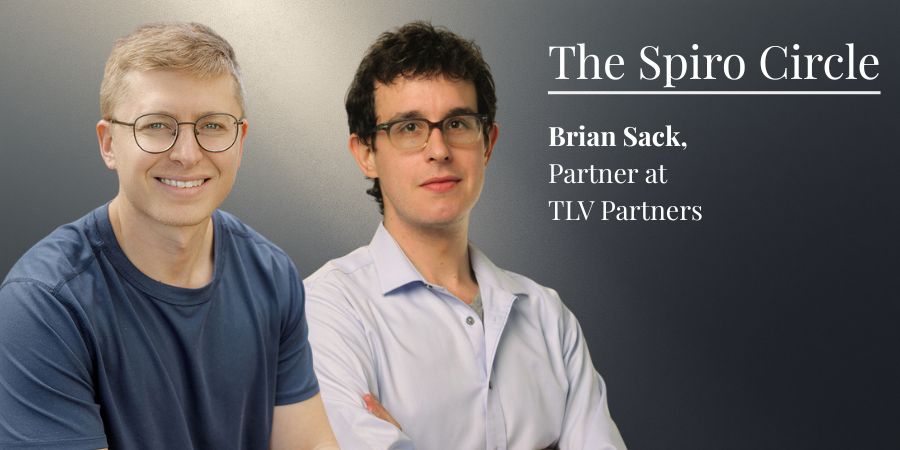
But in Israel’s startup ecosystem, a counter-trend is growing that favors pattern recognition and intellectual flexibility over narrow vertical obsession. To understand this concept better, I spoke with Brian Sack, a partner at TLV Partners, an Israel-based early-stage venture capital firm.
TLV Partners was founded in 2015 and specializes in early-stage investments, particularly in AI infrastructure, cybersecurity, developer tools, and cloud-native systems, as well as vertical AI across industries such as fintech, biotech, healthcare, and more. It has $1B assets under management, and has supported companies such as Next Insurance (acquired by Munich Re), Run:ai (acquired by NVIDIA), Granulate (acquired by Intel), Laminar (acquired by Rubrik), Aqua Security, Aidoc, Qodo, Port, and Quantum Machines, among others.
He describes his approach as being a “disciplined generalist,” which he explains as understanding how ideas migrate across sectors. “We want to look at every new technology trend, and we want to look at all verticals across the board,” he said. “We’re just extremely curious people. So we’re always tracking up-and-coming technology trends… Over time, we’ve realized that this has a huge impact as well on our strategy as a fund.”
As a journalist myself, I could connect this idea to my own personal attitude of being “a jack of all trades, and master of none”. I often describe my work as needing to cast a wide and shallow net over a variety of industries. But for TLV Partners, they take it a step further – their net is both wide and deep.
That philosophy runs against conventional wisdom in today’s VC market, where specialization is often framed as a prerequisite for conviction. But Sack argues that early-stage investing, particularly at seed, demands the opposite: an ability to sit with ambiguity long enough to see connections others miss.
“You’re almost sort of like journeying through darkness a lot of the time,” he added. “You don’t have a lot of data, and often you have to make decisions based on intuition or gut feeling. And I think growth investors are great at doing what they do and being very analytical. I prefer, and as a fund, what we like, and what we know how to do best, is to work with founders during the abstract time.”
“We need our founders to be a little bit crazy,” he added. “They have to have those crazy dreams and visions. I think as a firm, it’s part of our investment strategy and part of our culture, which is why I think a lot of entrepreneurs come to us for investment – because it’s something that is known in the industry that we never think of ourselves as there on the board investing to manage or make decisions on behalf of the company.”