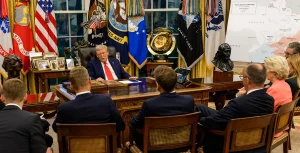
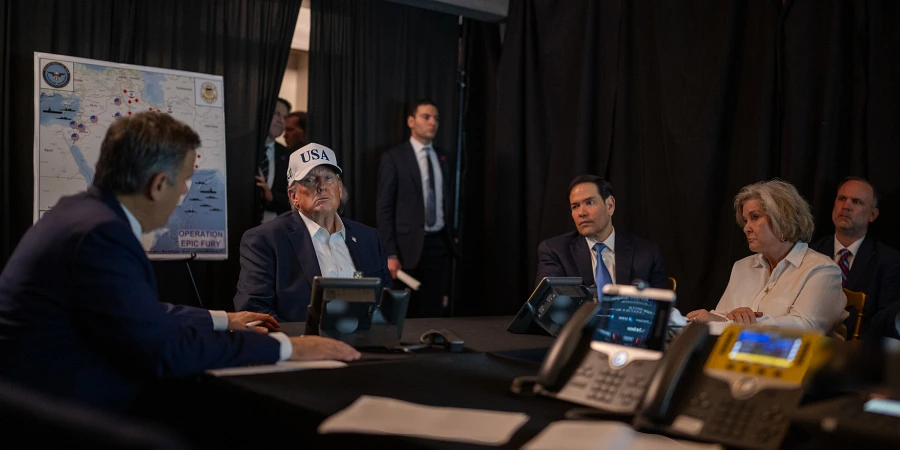
Donald Trump said this week that it had become “too late” for Iran to negotiate. In diplomatic language, such statements are seldome incidental. They are indicators of leverage, timing, and the perceived balance of power.
The comment is particularly striking in light of diplomatic negotiations between the United States and Iran that took place in the months preceding the recent military escalation, including discussions aimed at containing regional tensions and addressing Iran’s nuclear program. Against that backdrop, declaring that negotiations are now “too late” marks a clear strategic shift.
Apart from the immediate geopolitical impact, this statement reflects a more fundamental principle that applies to negotiation wherever it happens; on global diplomatic stage, in boardrooms and dealmaking within corporations: timing will always decide whether negotiation matters or not.
The prospect of talks between the United States and Iran has been a topic in strategic discussions on sanctions, nuclear programs and regional power for years. Negotiation was always presented as the route through which talks would eventually defuse tensions.
the incentives to negotiate fade rapidly
But when a leader publicly declares that negotiations are no longer relevant, the underlying message is clear: the window for an agreement deal have closed.
In negotiation theory, agreements typically emerge when three conditions exist simultaneously. Each side must believe it still needs something from the other. Both must see a negotiated outcome as preferable to continued confrontation. And there must be some overlap between what each party is willing to accept: the well-known Zone of Possible Agreement, or ZOPA.
As soon as any of these conditions is lifted, the incentives to negotiate fade rapidly.
If one side thinks it has already secured its core goals – military, economic or strategic – then negotiation is no longer needed. So the conversation shifts from how to get a deal to whether there even needs to be one.
Trump’s statement seems to signal exactly that change in perception. One may agree or disagree with the policy, but what this message conveys is a clear strategic posture: the balance of leverage has shifted to where negotiation is not considered necessary.
This dynamic plays out routinely well beyond the scope of geopolitics. In business negotiations, timing often determines whether discussions produce agreements or reach dead ends. Suppliers sometimes wait until the final stages of a contract cycle to renegotiate pricing, only to discover that buyers have already secured alternatives. Companies delay partnership discussions in the hope of improving their position, only to find that market conditions have shifted and the opportunity has passed.
Even inside organizations, teams occasionally postpone alignment conversations until after key strategic decisions have already been made, at which point their influence over the outcome becomes minimal.
In each of these cases, negotiation is treated as a reaction rather than a strategic tool that must be deployed at the right moment and the most strategic question for experienced negotiators is not just what to propose. The deeper insight is ensuring that the other side still sees value in reaching an agreement.
Timing in negotiation is rarely neutral
Once that perception disappears, the negotiation losea relevance. Timing in negotiation is rarely neutral. It is closely tied to power. The decision of when to negotiate reflects an understanding of leverage: alternatives, dependencies, and pressure points that influence the other side’s willingness to reach agreement. Skilled negotiators recognize these levers early and use them deliberately, ensuring that the conversation happens at a moment when a deal is still valuable for both sides.
There is an opening in every negotiation; that is when it counts. Talks are premature before that window is open. After it shuts, they could become mostly symbolic.
Trump’s declaration that it is “too late” for negotiations with Iran underscores a core principle of negotiation: timing is a function of power. Knowing when to negotiate requires understanding the levers that shape the other side’s incentives: alternatives, dependencies, and pressure points. Skilled negotiators recognize these dynamics early and engage while the opportunity for agreement still exists. Because in negotiation, as in geopolitics, waiting too long can mean that the conversation itself no longer matters.
Yael Chayu is a global business negotiation expert, keynote speaker, and strategic advisor to executives across industries. She is a doctoral researcher in Behavioral Economics at Reichman University, where she also serves as Academic Director of the Business Negotiation Program at FORE Executive Education.