This war did not begin as a battle over oil or markets. It began inside Iran, with public unrest, mounting internal pressure, and growing signals from the West suggesting a willingness to intervene, or at least support internal change. In its early phase, one issue dominated global headlines: Iran’s nuclear program. Concerns over nuclear escalation, international oversight, and potential military responses shaped the narrative.
But as the crisis evolved, that narrative quietly receded. In its place emerged a broader and more complex story, one centered on regime stability, strategic strikes, and shifting regional balances. Yet the most consequential shift did not take place on the battlefield. It took place in the global economy.
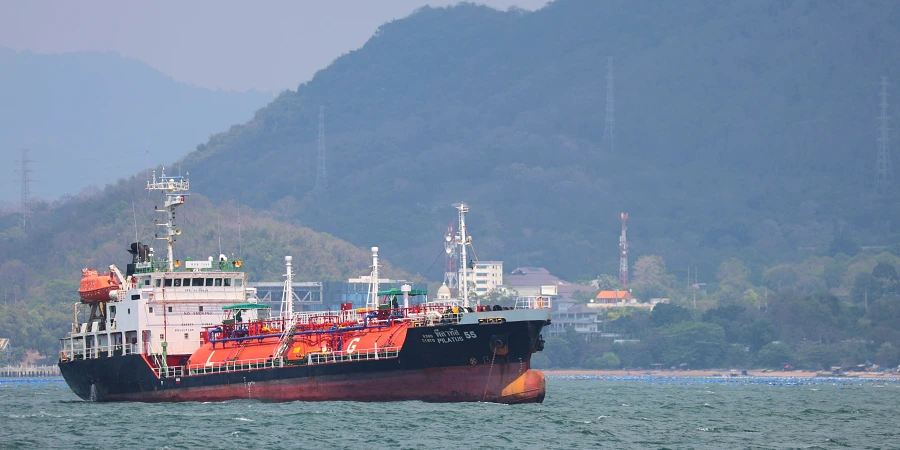
What we are witnessing is not merely a geopolitical conflict, but a systemic economic confrontation that sits at the heart of global stability: energy. At its core, this is a war over chokepoints, narrow straits, critical shipping lanes, and the fragile arteries that keep the global economy running. And in this arena, Iran identified a powerful advantage. Constrained militarily and politically, it turned to asymmetry. It does not need to physically block oil flows to disrupt them. It only needs to make disruption believable.
In modern markets, perception is reality. The mere possibility of escalation, a threat to shipping routes or a signal of instability, is enough to move prices, widen risk premiums, and inject volatility into financial systems. Oil markets respond instantly. Equity markets follow. Capital becomes cautious. Governments reassess. And a feedback loop is created, where uncertainty amplifies itself.
In this sense, Iran is not only controlling a physical chokepoint, it is effectively controlling a psychological one. It is “sitting on the valve” of global sentiment, where the threat itself becomes a strategic asset. This is a different kind of warfare, one where influence is exercised not through direct confrontation, but through market sensitivity. In the short to medium term, this strategy is highly effective. It requires limited resources, avoids large scale escalation, and impacts multiple global actors simultaneously. Governments are forced to rethink energy security. Corporations delay major investments. Investors seek safe havens in an increasingly unstable environment. Yet history suggests that such pressure rarely remains one sided.
Sustained disruptions tend to trigger structural responses. And this is where the long term implications begin to take shape. As risks around traditional oil routes intensify, the global system will adapt. The transition toward renewable energy is likely to accelerate. Investments in alternative infrastructure will grow. Energy sources will diversify.
Beyond that, we are likely to see a strategic reconfiguration of global transport itself, with the development of new routes designed to bypass vulnerable chokepoints such as the Strait of Hormuz. Expanded pipeline networks, overland trade corridors, and alternative maritime paths will increasingly be viewed not just as economic projects, but as geopolitical necessities. In other words, the use of oil as a pressure tool may ultimately erode its own power. The more it is weaponized, the stronger the incentive becomes to reduce dependence on it.
This shift will not happen overnight. But the direction is clear. Moments of crisis often act as accelerators of deep, structural change, and this may prove to be one of them.
At the same time, the political layer cannot be ignored. In recent years, the global landscape has been increasingly shaped by populism, short term decision making, and domestic pressures that often outweigh long term strategic thinking. Leaders are required to respond quickly to rising costs, market volatility, and public sentiment, sometimes at the expense of coherent, forward looking energy policy.
This tension between immediate political needs and long term economic realities is likely to define the next phase of the crisis. Ultimately, this is no longer just a story about oil, or even about energy. It is a story about how fragile the global system has become, and how quickly power can shift from physical control to economic influence.
The real question is not whether the world will respond, but how fast, and whether that response will be strategic or once again reactive.
Eldad Tamir, Founder and CEO of the Tamir Fishman Group and FINQAI and a Contributor to Forbes Israel.
Forbes Israel Contributors are independent writers selected by the Forbes editorial team, experts in their fields, providing current commentary and reviews in their area of expertise. The content is their own and under their responsibility and is not sponsored content.