Clarity, an Israeli AI Security startup specializing in deepfake detection and synthetic identity screening, has been acquired by Deel, the global people platform used by tens of thousands of organizations to hire, manage, and pay employees in more than 150 countries. The deal, Forbes Israel has learned, closed at an estimated valuation of $40-45 million.
It marks a double milestone for the global HR giant: this is the first time Deel has acquired an Israeli company, and also the first cybersecurity acquisition in its history.
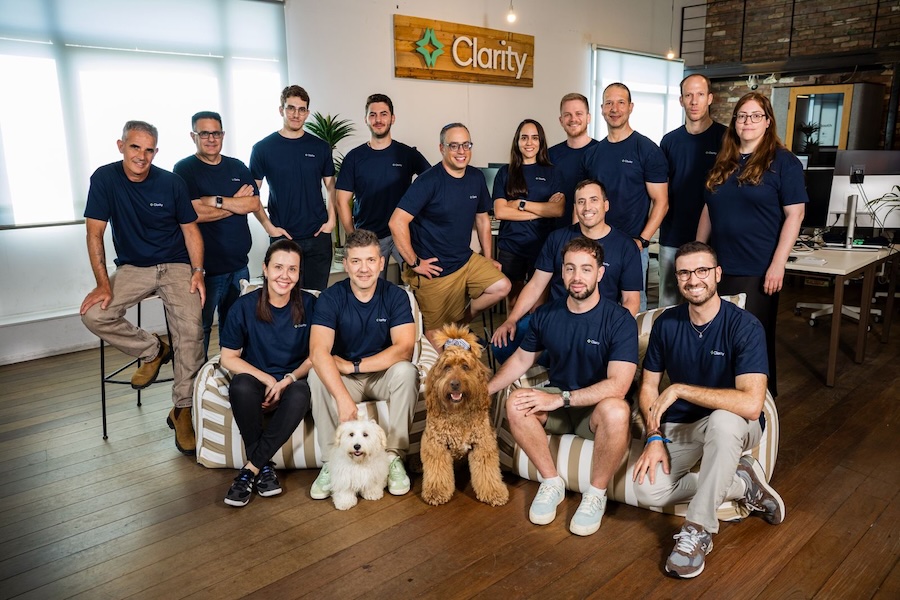
According to information obtained by Forbes Israel, all 15 of Clarity’s employees are expected to join Deel, forming the global company’s first cybersecurity division. Michael Matias, Co-founder and CEO of Clarity, is expected to take on a senior role at the global company following the merger, working alongside Deel’s Co-founder and CEO, Alex Bouaziz, on the company’s AI Security efforts. In effect, the move will turn Deel into a company that also provides security services to organizations.
1 in 4: A Fake Identity
Clarity’s technology helps organizations verify that the people they hire are truly who they claim to be – in an era when faces, voices, and documents can be convincingly faked in real time, and job candidates can even sit through online interviews via deepfake.
Following October 7 the company’s technology was also used by Israeli security bodies and government agencies to verify the authenticity of sensitive video footage and documentation. In recent years, impersonation attacks targeting hiring processes have become one of the fastest-growing and most alarming cybersecurity threats.
Just days ago, the FBI and the U.S. State Department issued a warning about a covert operation run by North Korea, in which it deploys a network of skilled IT workers operating both inside and outside the country. According to the U.S. authorities’ announcement, these “workers” pose as citizens of other countries to get hired through online platforms. Once hired, they reportedly gain privileged access to internal systems, source code, and sensitive data.
This exceptional warning aligns with an assessment by research and advisory firm Gartner, which forecasts that by 2028, one in four remote employees at organizations will hold a fake identity.
The acquisition comes after Deel itself was a Clarity customer for continuous biometric verification. Now, following the acquisition, the global HR giant – which itself serves tens of thousands of customers across 150 countries – will be able to expand the trusted-identity capabilities within its platform with continuous biometric verification spanning the employee’s entire lifecycle: from identity verification and background checks before hiring, through equipment provisioning for new employees, to secure access management after onboarding.
Deel, which surpassed $1.5 billion in Annual Recurring Revenue (ARR) in the first half of 2026, is currently valued at more than $17 billion.
“AI is changing every part of how companies build global teams, but it’s also changing the threat landscape,” said Alex Bouaziz, Co-founder and CEO of Deel. “Organizations need more than point-in-time verification; they need continuous trust. Bringing Clarity and its world-class AI talent into Deel gives us the capabilities to build trusted identity security directly into our platform. This lets customers confidently hire, onboard, and manage verified teams globally, with continuous safeguards that evolve as threats get smarter.”
Business Within the Community
Michael Matias founded Clarity in 2022 together with two other co-founders, Gil Avriel and Natalie Fridman. When the company shifted its focus toward enterprise security, the co-founders parted ways, each pursuing his or her own path. Matias continued to lead the company, and was joined by Ziv Yeshayahu, who today serves as Chief Technology Officer.
“The company actually grew out of research I did at Stanford on deepfakes,” Matias tells Forbes Israel. “From there, we developed our ability to detect deepfakes and fake identities. Over the past year, we saw that the biggest threat was actually coming from organizations hiring remote employees, and that’s where we really focused the product,” he notes. “Deel became a customer, and that’s where the romance began.”
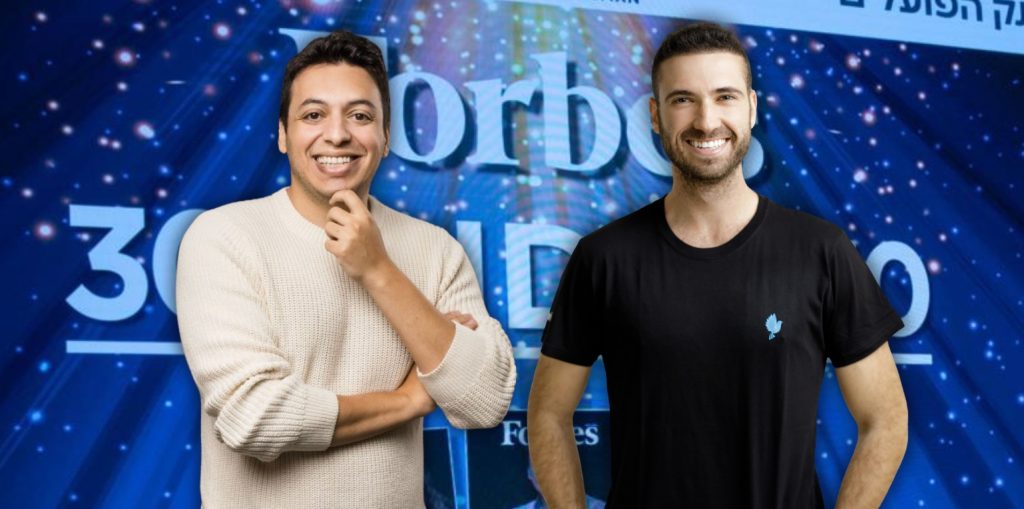
Matias, a veteran of Unit 8200 who holds a degree in artificial intelligence from Stanford, was selected to Forbes Israel’s list of promising young leaders – the Under30 – in 2016, years before founding Clarity. Six years later, in 2022, Alex Bouaziz, Co-founder and CEO of Deel – the company now acquiring Clarity – was chosen for the same list.
“The connection with Alex and with Deel felt natural from the very first moment,”
“The connection with Alex and with Deel was natural from the very first moment – both on a personal level and on a professional level”, Matias shares. “Deel became a major customer of ours over the past year – an incredible company with more than 40,000 customers. At the end of the day, as an HR giant, their customers need a high level of trust; they have to make sure the people they’re hiring for their company are real – not deepfakes, and not fake identities. Unfortunately, that’s something that’s become common today all over the world, especially on global HR platforms. That’s exactly where we partnered with Deel and joined forces in a paid capacity – so this acquisition is really a natural next step in the company’s evolution.”
Matias describes the starting point from which things began to unfold: “We started having a series of strategic conversations along the lines of, ‘wait, how do we bring this to all 40,000 of Deel’s customers?’ In the end, we concluded that the smartest and most correct way to do that was through a merger with Deel.”
And despite the natural fit between the two sides, he says the strategic partnership was more than just a business relationship and an opportunity seized: “It’s not that we sat down and said, okay, we’re both Under30 – let’s do business. But as members of this wonderful Forbes community, there’s something more to it. It creates a level of trust and community partnership that doesn’t exist elsewhere, and that lets us do business in a much better way.”
“There’s no question that being selected to the Under30 list, and being part of this amazing community, is a huge catalyst for business,” he continues. “I don’t know how it works in Forbes’ other young-leader communities around the world, but in Israel it’s very much felt, and it comes through with every person I meet in the community – a feeling of trust, of togetherness, of initiative, and of creation.”