
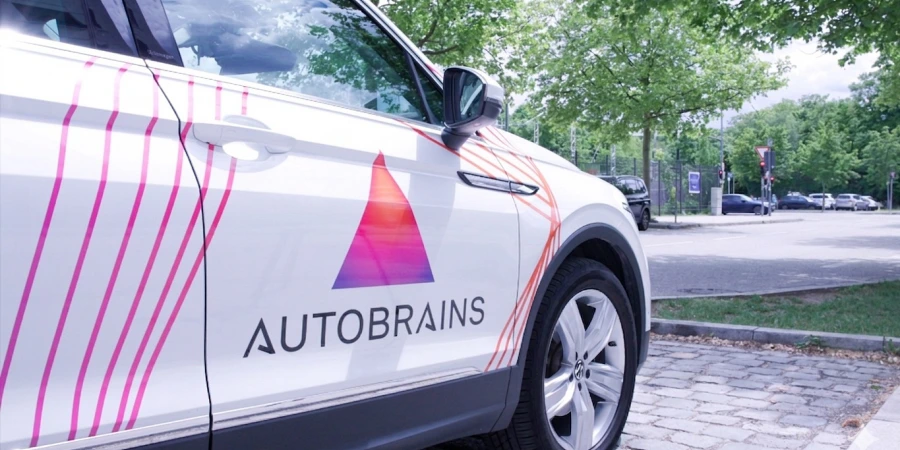
Uber, Israeli autonomous driving startup Autobrains, and NVIDIA announced a strategic collaboration to launch a robotaxi program in Munich, combining Uber’s ride-hailing platform, Autobrains’ agentic AI technology, and NVIDIA’s DRIVE Hyperion platform. The announcement was made at GTC Taipei. Munich will serve as the first deployment city, pending regulatory approval.
The choice of Munich is deliberate. As one of Europe’s leading automotive hubs, the city offers a combination of dense urban streets, high-speed road networks, and a structured German regulatory environment – conditions that the partners believe make it the right launchpad for commercially scalable autonomous mobility.
A Different Approach to Autonomy
Most autonomous vehicle programs have historically depended on custom-built vehicles, heavy sensor arrays, and proprietary compute architectures – a model that has proven difficult to commercialize at scale. Autobrains is betting on a different architecture.
Rather than relying on a single end-to-end AI model to handle the full driving task, the company’s Agentic AI system breaks driving down into specialized agents, each focused on a specific driving context or decision dimension. These agents evaluate conditions continuously, reason across multiple possible actions, and select responses in real time – an approach the company says produces more robust behavior in unpredictable environments while remaining efficient enough to deploy across vehicle fleets.
Critically, the system is designed to run on standard automotive sensor configurations rather than requiring custom hardware, which is central to the program’s OEM-agnostic ambitions.
Three Layers, One Platform
The collaboration is structured around three distinct components: Autobrains’ autonomous driving intelligence, NVIDIA’s DRIVE Hyperion robotaxi-ready Level 4 platform, and Uber’s global mobility network and operational infrastructure.
The goal is to move autonomous ride-hailing away from isolated, one-off deployments and toward repeatable, scalable fleet infrastructure that can operate across vehicle platforms and urban markets — without being locked into a single automaker.
For traditional automakers, the model offers a potential entry point into the autonomous ride-hailing market: contribute a vehicle platform, plug into autonomous technology and fleet operations, and gain access to Uber’s marketplace.
Munich is the starting point, not the destination. The partners have designed the program to scale across OEM platforms and urban markets, with the ambition of establishing a template for commercial autonomous mobility in Europe and beyond.
Regulatory approval in Germany will be the first test of that timeline.