
In most negotiations, urgency is treated as a clear advantage. Something to be created, amplified, and ultimately used to accelerate decisions before conditions shift or opportunities narrow.
In business, this logic is almost unquestioned. Time is money. Delays translate into lost value. Momentum is not just helpful: it is often what determines whether a deal happens at all.
But the current dynamics between the United States and Iran suggest a more nuanced reality, one that is less about urgency itself and more about how differently it is experienced by each side.
Because urgency, when it is not shared, does not necessarily move a negotiation forward. It reshapes it.
A signal of strength
At this moment, the United States is operating under visible and increasing time pressure – driven by economic implications, political cycles, and the broader impact of instability in key global corridors such as the Strait of Hormuz. The need for progress is not abstract; it is embedded in markets, in alliances, and in domestic expectations that demand movement. Iran, by contrast, is not negotiating under the same clock. And that difference is not incidental, it is structural.
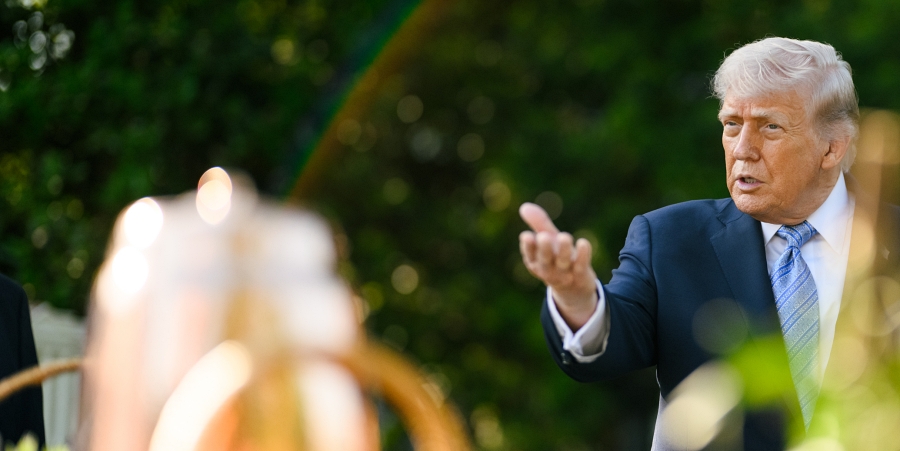
For years, the negotiation approach often associated with Donald Trump has relied on a familiar principle: apply pressure, define timelines, and create a sense of inevitability around decision-making. In many business environments, this approach proves highly effective, precisely because deadlines compress thinking, reduce optionality, and force counterparts to engage with trade-offs they might otherwise avoid. But this entire logic rests on a deeper assumption – that both sides interpret time in broadly similar ways. Here, they simply do not.
Western negotiation culture tends to treat time as a scarce and diminishing resource, where speed signals control and delay is often interpreted as weakness or avoidance. Progress is measured in movement, and movement itself becomes a signal of seriousness.
Iran operates within a fundamentally different framework, one shaped not only by strategic calculation but also by cultural and historical narratives rooted in Shiite thought. Within that context, patience is not passive, and endurance is not a fallback position. The ability to sustain a position over time ,without rushing to resolution, is itself a signal of strength. Waiting is not perceived as losing ground; it is often a way of redefining the negotiation altogether. And it is precisely at this intersection that timing turns into leverage.
When one side operates under urgency and the other does not, time itself becomes asymmetric, and asymmetry in time translates directly into asymmetry in power. The side that needs movement becomes more predictable, more exposed, and ultimately more constrained in its ability to hold positions over time. The side that can afford to wait, on the other hand, gains flexibility, preserves optionality, and can shape not just the outcome – but the pace at which that outcome is even discussed.
The longer this structure holds, the more pressure accumulates on the side that is exposed to time. Markets react, allies respond, and internal expectations begin to tighten the window for acceptable outcomes. Meanwhile, the side that is less constrained by time retains the ability to wait, reassess, and re-engage on more favorable terms. This is leverage in its less visible, but often more decisive, form.
Pressure does not accelerate resolution
In business negotiations, the same pattern appears more often than leaders assume. Deals rarely stall because they are impossible; they stall because the timing is misaligned. One side is measured on closing within a quarter, while the other is optimizing for long-term positioning. One side feels the cost of delay immediately, while the other experiences it only marginally, if at all.
The instinctive response in such situations is to increase pressure: tighten deadlines, escalate messaging, and attempt to force convergence. But when the other side is structurally positioned to absorb time rather than react to it, pressure does not accelerate resolution. It amplifies the asymmetry.
The more effective question, therefore, is not how to move faster, but how to prevent time from being used as a lever against you. If you feel urgency and the other side doesn’t – try to change the structure. Create points where delay has a cost for them as well, whether through expiring value, developing alternatives, or external dependencies.
Because if urgency exists only on your side, it doesn’t create leverage.
It defines your vulnerability. And when only one side is in a rush, time itself becomes the most powerful player at the table.
Yael Chayu is a global business negotiation expert, keynote speaker, and strategic advisor to executives across industries. She is a doctoral researcher in Behavioral Economics at Reichman University, where she also serves as Academic Director of the Business Negotiation Program at FORE Executive Education.
The contributors of Forbes Israel are independent writers selected by the Forbes editorial team. They are experts in their fields, providing commentary and current insights within their area of expertise. The content is their own and their responsibility, and it is not sponsored content.