
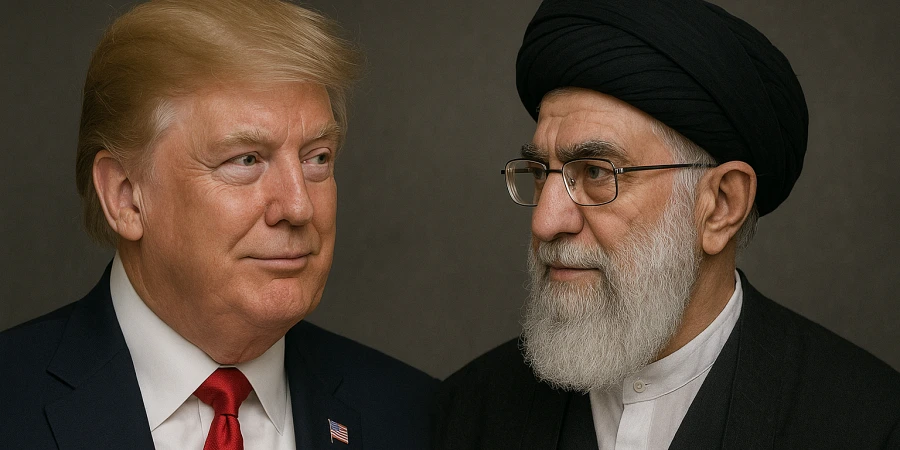
Trump’s second term began with the confidence of a president determined to prove that America could still impose its will. He moved aggressively on the southern border, pressured adversaries across Latin America, sought to bring strategic supply chains back under U.S. influence, and confronted allies as readily as rivals. His preferred pattern was clear: hit hard, move fast, shift the facts on the ground, and force others to adjust.
Iran was supposed to fit that model. A powerful U.S.-Israeli campaign would cripple the regime, humiliate its leaders, and open the way either to a better deal or to a new strategic reality in the Middle East. For Washington, the potential prize was enormous: a pro-Western Iran, a more secure Gulf, and a blow to the wider anti-American axis led by China and Russia.
The campaign began with stunning tactical success: Israel took out Ayatollah Khamenei, sending Iranian exiles into the streets, dancing to “YMCA” in celebration. Alongside him, roughly 40 of Iran’s top military officials were eliminated in the opening strike. At the same time, the United States hit with overwhelming force across the country, stripping Iran of much of its military infrastructure.
But Tehran did not collapse. It recovered quickly, launching missiles at Israel and a dozen neighboring countries, including Turkey (a NATO member) and Cyprus (an EU member). The Iranians threatened energy infrastructure and reached for the ultimate choke point: the Strait of Hormuz. That narrow waterway carries roughly one-fifth of global seaborne energy trade. Once it was closed, the war was no longer measured only in destroyed launchers or missile depots; it was measured in oil prices, market volatility, inflation fears and political risk.
That is when the temptation to stop set in. The main blow had been delivered. Iran had been hit hard. The American message had been sent – or so Trump believed. He simply could not understand why the Iranians did not accept that they had lost. But to Iran’s rulers – much as Israel learned from Hamas and Hezbollah – survival itself was victory. Iran retained elements of its nuclear infrastructure, a significant stockpile of ballistic missiles, control over its regional proxies and, most important, the ability to disrupt the global economy through Hormuz. Nevertheless, Trump declared victory and shifted to ceasefire diplomacy.
And so began months of endless negotiations in which Trump fell into an all-too-familiar Western pattern: exercising restraint against an enemy that interprets it as weakness, downplaying ceasefire violations to avoid retaliation, and offering financial incentives in the futile hope of taming a radical enemy. These were precisely the illusions that shaped Israeli policy before October 7.
Western Illusions
The first illusion is strategic mirror-imaging: the habit of assuming that enemies value what democracies value – prosperity, stability, public welfare and a normal life. Israel made that mistake with Hamas for years. It told itself that jobs, Qatari money and economic prosperity would moderate an ideological movement committed to its destruction. Tragically, the result was not moderation, but preparation. Hamas used the money to buy arms and dig tunnels. It used periods of calm to train for October 7.
Washington risks repeating the same error with Iran. Trump looked at the damage inflicted on the regime and saw defeat – Tehran looked at the damage and celebrated its endurance.
That mismatch leads directly to the second illusion: the belief that deterrence can be bought. Once Washington turned from pressure to incentives, and Trump sent JD Vance with an open wallet to try to secure a deal, Tehran gained the leverage. Sanctions relief, the unfreezing of assets and reconstruction funding all suggested that Washington was prepared to pay heavily for an agreement.
This is exactly the logic Republicans mocked a decade ago, when Obama signed the nuclear deal with Iran. A decade later, Vance was making the same argument: that economic incentives could moderate a radical regime by giving it something to lose.
Faithful to this illusion, and in pursuit of an Iranian climbdown that never came, Trump halted his military campaign and tied Israel’s hands. He stopped short of ordering strikes on civilian infrastructure – electricity, water and naval ports – even though these were the very systems that sustained the regime’s machinery of repression and enabled it to keep fighting. The rationale was humanitarian, as Trump sought to preserve a viable economic base for a future post-regime Iran.
But here, too, the paradox Israel knew so well returned: to protect a population ruled by a radical enemy, Western governments avoid the steps required to topple that regime – and in doing so prolong both the war and the suffering of the very people they seek to protect. In other words: while hoping to create better conditions for the day after, Trump avoided the steps needed to bring that day about.
The third illusion is restraint disguised as strategy. When Iran tested the ceasefire with limited barrages, the instinct in Washington was to absorb rather than retaliate. Trump repeatedly offered reasons not to respond: first that no one was killed, then that no serious damage had been caused. At one point, he also suggested that “rogue elements” in Iran were behind some of the missile attacks. That logic was politically convenient, but strategically corrosive – it told the enemy that the threshold for response was not intent, but body count.
Israel knows this pattern all too well. For years, Israeli governments exercised restraint when they preferred not to deal with Gaza. They normalized rocket fire from Gaza because Iron Dome intercepted most of it. Before long, defensive success became a strategic sedative: the absence of mass casualties became an excuse for restraint, even though repeated attacks traumatized an entire generation and eroded the deterrence Israel needed to preserve the status quo.
To these strategic follies, the economy always adds its own pressure. A prolonged conflict is not judged only by military results – it is also assessed by gasoline prices and the sentiment on Wall Street. The equation of American politics is clear: when Americans pay more at the pump, they punish the party in power. With the midterms approaching, that gives Iran leverage. Tehran does not need to defeat America militarily – it only needs to make victory feel too expensive.
Authoritarian and ideological regimes are built to outlast democratic impatience. They understand that Western leaders often enter conflicts promising decisive results, then gradually redefine success downward: from total annihilation to degrading capabilities, from eliminating the nuclear threat to delaying it, from completely reshaping the region to reopening a waterway that should never have been closed in the first place.
This is how deterrence erodes. A war begins with overwhelming force and powerful language. It then becomes a negotiation over de-escalation. Concessions are reframed as realism, and the enemy learns that survival brings rewards. The West calls this responsible restraint. Radical regimes call it permission to persist.
Iran Is Forcing a Choice
Since the ceasefire, Iran has interpreted America’s desire for an agreement as evidence that pressure works, even on Trump. Its violations have grown bolder: attacks on ships and bases, renewed threats around Hormuz, and missile fire designed to test the limits of U.S. restraint and deplete its stockpile of interceptors. The more Washington tries to preserve the diplomatic track, the more Tehran escalates.
To Trump’s credit, he has long understood the Iranian threat better than many Western leaders. He was right that the original nuclear deal was naïve and dangerous. He was right that Tehran responds to force more than goodwill. And he is right that a nuclear Iran would be devastating to Western interests globally. But identifying the threat is only the first step toward eliminating it. Launching a military campaign and then stopping before the enemy’s core capabilities are destroyed only teaches the enemy that the West never follows through.
Trump is now caught between a rock and a hard place: If he continues to issue extreme threats only to back down a few hours later, he could roll back many of the gains he secured for America in his first year back in office. If he escalates, he risks a wider war, higher energy prices and political backlash at home. Iran understands this dilemma and is exploiting it.
It is tempting to say that the solution was never to go to war in the first place. But that misses the deeper failure. Western history, and Israel’s as well, is full of cases in which democracies avoided confronting murderous regimes that made no secret of their intentions. A regime that kills its own citizens, pursues a nuclear bomb, attacks its neighbours, aligns itself with the West’s worst enemies and openly seeks Israel’s destruction cannot be managed indefinitely. It must be confronted.
So what is the way out? It starts with recognizing the obvious: not every enemy can be bought off, and not every ceasefire is a step toward peace. Some regimes interpret gestures as fear, restraint as weakness and negotiation as proof that violence works. Against such enemies, deterrence can only be restored with decisive force.
Trump may still prefer to reach a deal and move on, but it is unlikely Iran will give him what he seeks. In fact, by continuing to provoke him, Tehran is forcing Trump toward yet another conclusion Israel reached too late: you cannot reason with radical enemies indefinitely. At some point, you have to eliminate them.