
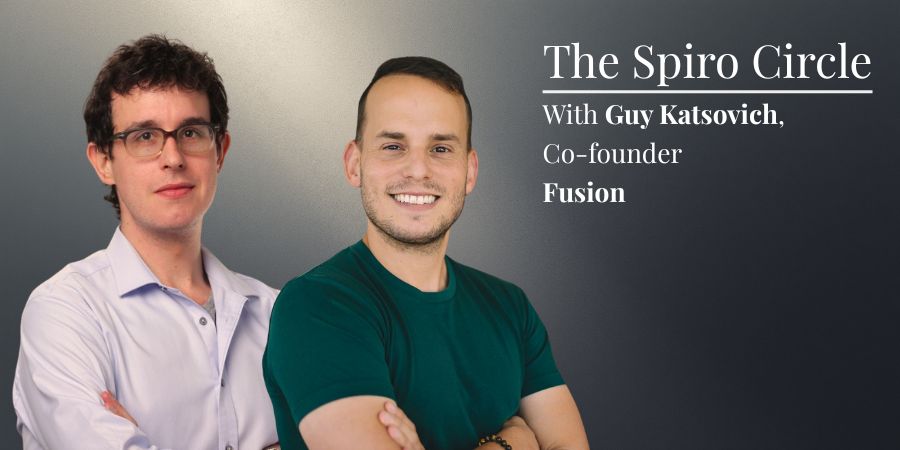
The venture capital market has never been more competitive, particularly at the earliest stages. As capital increasingly flows toward repeat founders with proven track records, first-time entrepreneurs often face a much steeper path to securing their first institutional backing.
Guy Katsovich, co-founder of Fusion, one of Israel’s most active pre-seed venture capital firms, believes this imbalance creates an opportunity for investors willing to look beyond the obvious.
In a new video interview, Katsovich discusses Fusion’s contrarian approach to early-stage investing and why the firm places less emphasis on conventional markers of success.
For Katsovich, investing at the pre-seed stage is ultimately about identifying people who can build something exceptional before there is enough evidence to make the decision easy. That means embracing uncertainty, maintaining intellectual humility and being willing to back founders who may not fit the traditional venture capital profile.
The conversation also explores one of the most difficult questions in startup investing: when should founders and investors continue supporting a company through a difficult pivot, and when does persistence become a sunk-cost trap?
But Fusion’s contrarian approach extends beyond investment decisions. Katsovich shares the story behind the firm’s media strategy and how a podcast that began as an unconventional experiment evolved into a significant engine for sourcing new investment opportunities. Today, Fusion says its podcast generates more than 200,000 monthly listens and contributes 70%–80% of the firm’s deal flow.
The discussion then moves beyond startups and into the changing relationship between media, politics and public opinion in Israel. Katsovich examines why politicians are increasingly turning to long-form podcasts and two-hour conversations to communicate directly with voters, bypassing the traditional media formats that have dominated political communication for decades.
From identifying overlooked founders to building a media platform that has become a strategic asset, the conversation offers a look at how contrarian thinking can influence both venture investing and the way ideas reach an audience.