The Future of Cybersecurity May Look Like Swarms of AI Hackers
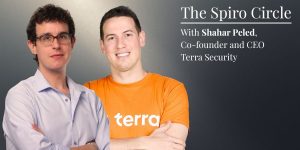
Terra Security says autonomous agents can chain together “insignificant” flaws into critical threats. Continuously. And at machine speed.

Terra Security says autonomous agents can chain together “insignificant” flaws into critical threats. Continuously. And at machine speed.

Itamar Golan built a $250M AI security company on the idea that the biggest threat to a company’s data is its own workforce.
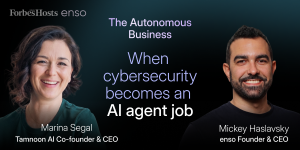
Marina Segal built an AI platform that fixes vulnerabilities instead of just finding them. Here is why speed, not detection, is the real crisis.

Israeli marketing obsesses over numbers. American marketing obsesses over narrative. One works better at the start.
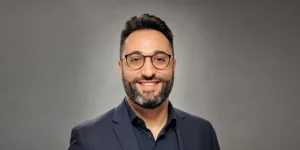
The Israeli startup, backed by serial entrepreneur Mickey Haslavsky, is wagering that AI-built business functions will replace the SaaS stack. Tzofi, who drove a fivefold jump in new business at Statista, has been hired to turn that thesis into enterprise revenue.

The agreement with AI cloud infrastructure giant, totaling hundreds of millions of dollars, will value the company founded by Maor Maloul, Nissim Shriel-Gaon, and Omer Adam at approximately $1 billion

As AI accelerates fraud, companies are being forced to balance privacy, security, and scale in entirely new ways.

Behind every concert or sporting event is a workforce of thousands: disconnected, temporary, and difficult to manage. Ubeya is turning that chaos into a real-time operating system for hourly workers.
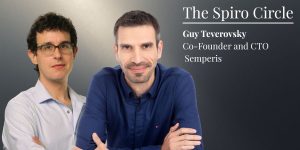
While cybersecurity is often framed as a technical challenge, many of the industry’s biggest problems are increasingly human.
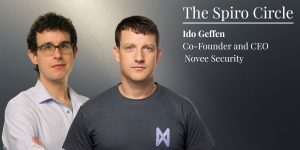
Today’s companies are being built around principles aligned with IDF operations: constant simulation, adversarial thinking, and learning under uncertainty.